
Up close and personal with Peregrines
Guest blog by Hellie Foot
As any local Peregrine fan knows, one of the wonders of Poole in Dorset are the 'ASDA' peregrines. I was invited for a once-in-a-lifetime opportunity to join the DRSG team at ringing time, 12 floors up in the Harbour Sail building, known locally as the ASDA flats.
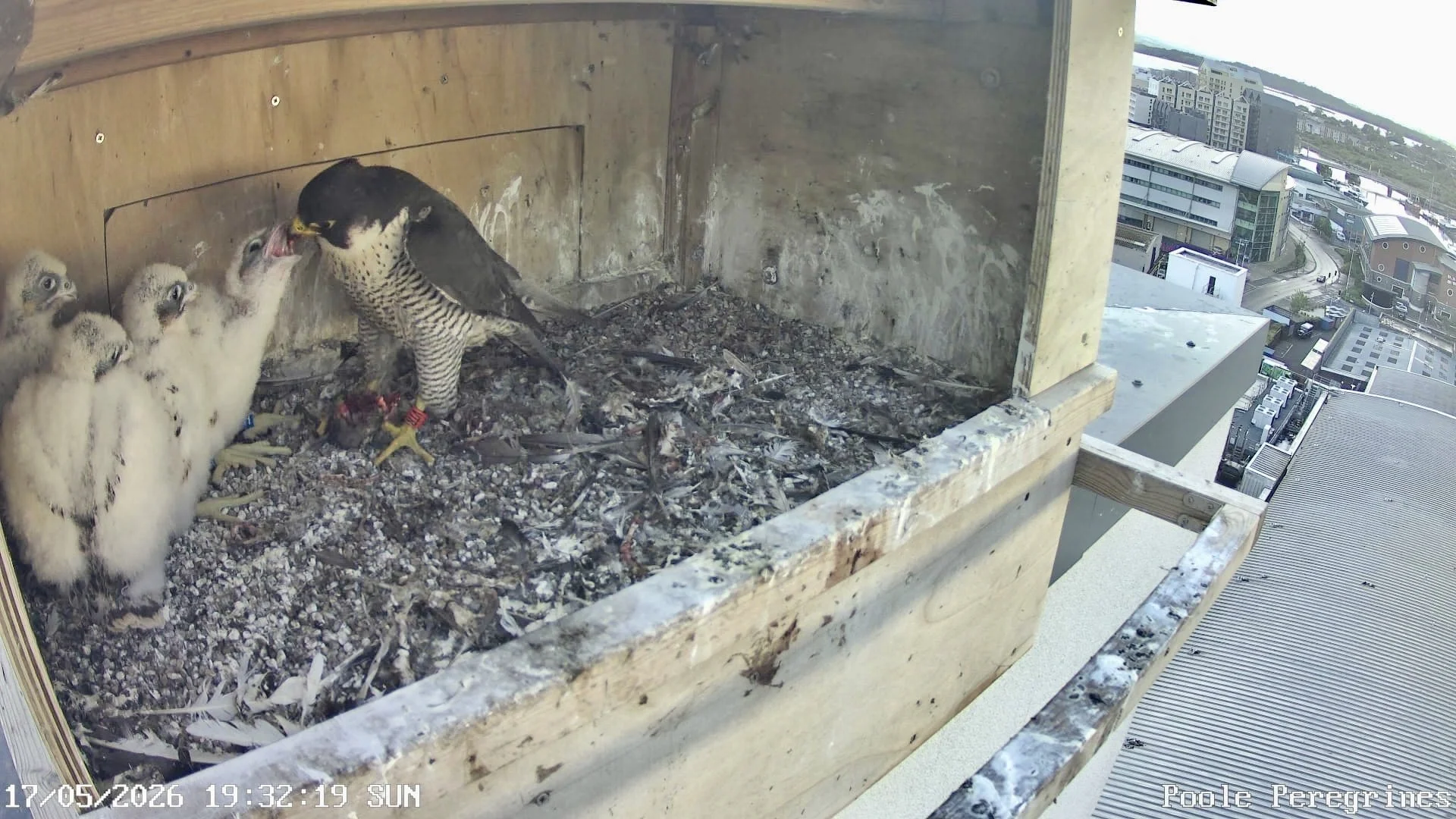
Poole Peregrines in DRSG nest box
As any local Peregrine fan knows, one of Dorset’s wonders are the Poole peregrines. Favourite of local birdwatchers and raptor enthusiasts alike, people 'in the know' often stop to gaze skywards and photograph them. Dorset Raptor Study Group were asked to install a nest box and camera and now, in their second year of nesting, it's ‘all go’ again as another fabulous brood of young peregrines are busy growing and all too soon will be on the wing.
I spent a lot of time watching these birds and capturing images of these birds on my camera, and so it was great news when in March, Dorset Raptor Study Group (DRSG) announced via their Bluesky socials that the peregrine pair from last year were back and sitting on 4 eggs. Under the Wildlife and Countryside Act 1981, Peregrine Falcons are a Schedule 1 protected species here in the UK, and this gives the birds legal protection, especially around nesting sites.
Following their progress via the DRSG socials, a great place for so any raptor enthusiast to keep track on updates from some of Dorset's amazing rare raptors, it was easy to watch camera footage of their progress. The four healthy chicks hatched over nine days, from the first egg on 16th March to the final one on 25 March, great news indeed.
The chicks all hatched safely and that should be no surprise as the difference for this year is that the eggs were laid in a new, warm and cosy, DRSG-installed nest box, which can be clearly seen if you look up from the ASDA car park. It was only through some emergency intervention that the four chicks last year survived a rather wet and windy roof gulley nest site chosen by the female peregrine.
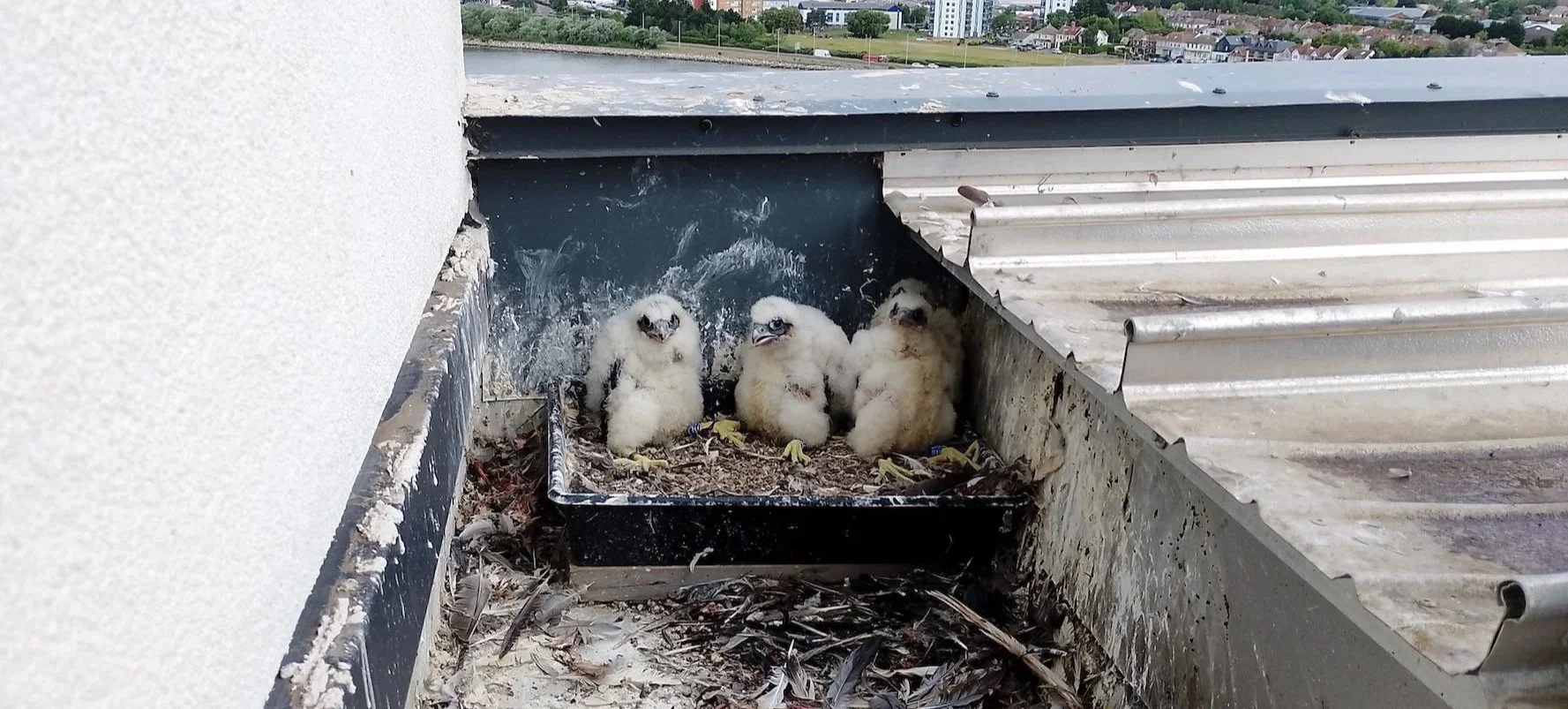
The old peregrine nest site open to all the elements which nearly got flooded out!
As a keen conservation volunteer, I asked DSRG if I could help and was delighted to be asked along to assist with this year's ringing of the chicks. Bird ringing provides information on the survival, breeding success, and movements of birds, enabling understanding and why populations might be changing. Here in the UK the bird ringing scheme is run by the British Trust for Ornithology (BTO) and you can find out more here.
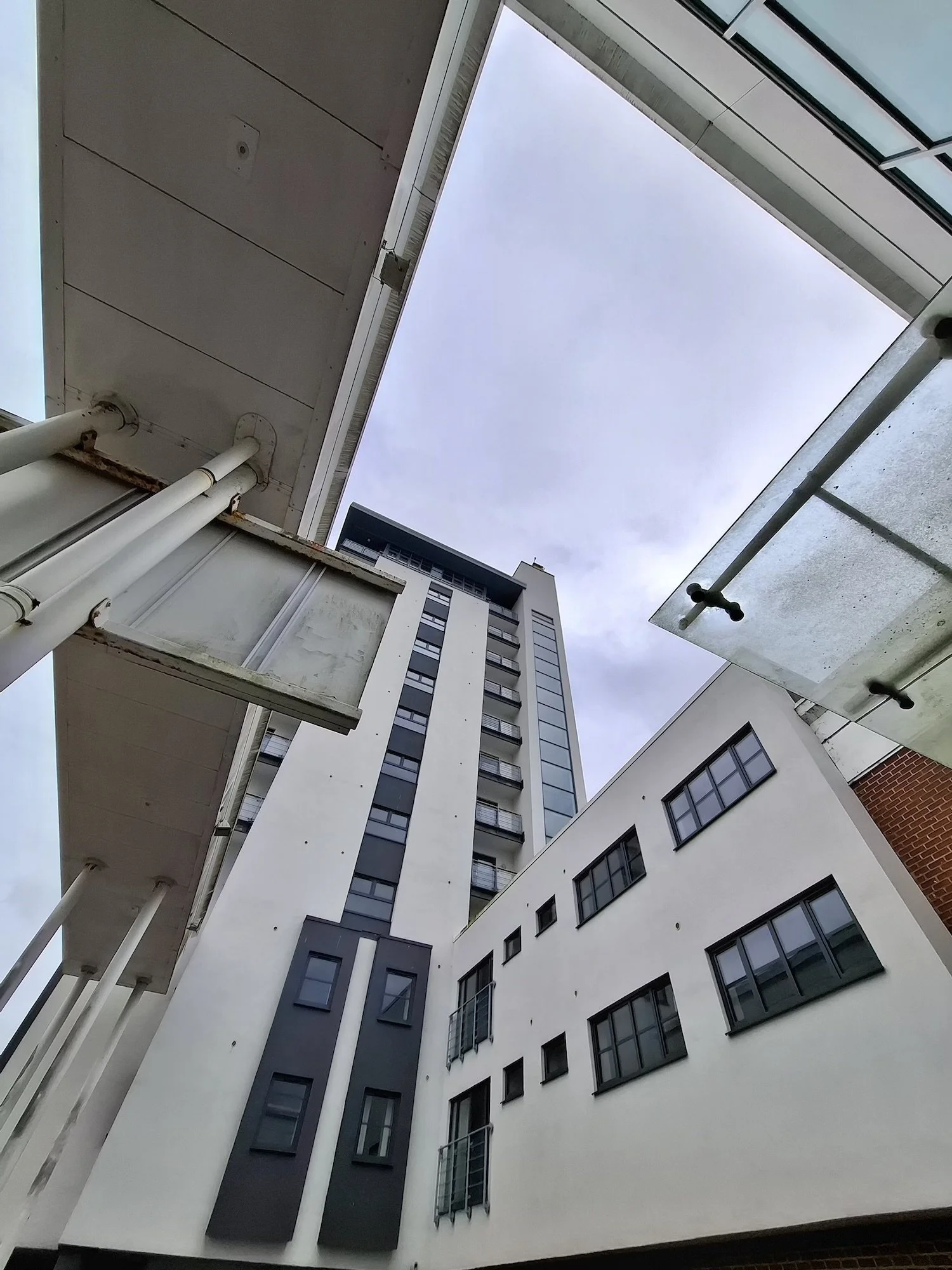
Peregrine nest box & camera just visible on the roof of the Harbour Sail building
Peregrine ringing takes place around 3 weeks after chicks hatch and it is undertaken by specially trained and licensed bird ringing teams such as DRSG’s Jason and Tim. We met on a cold and overcast Sunday afternoon in May at the bottom of Harbour Sail, along with Charlie from Stone Water who own the Harbour Sail building.
Tim and Jason require a lot of equipment for this very important exercise and, despite currently awaiting development, thankfully the lifts were in service as the Harbour Sail is a twelve-storey building! The final 'climb' was through a locked portal with a ladder up through a hatch door to the skies above, so in reality, it was thirteen floors for Tim and Jason.
After setting out their ringing equipment, and donning PPE, it was time to collect the chicks and safely bring them down to the floor below where the ringing would take place. The box was opened up and each chick was placed into a special, soft drawstring bag into a box which was then very gently lowered down where I was waiting.
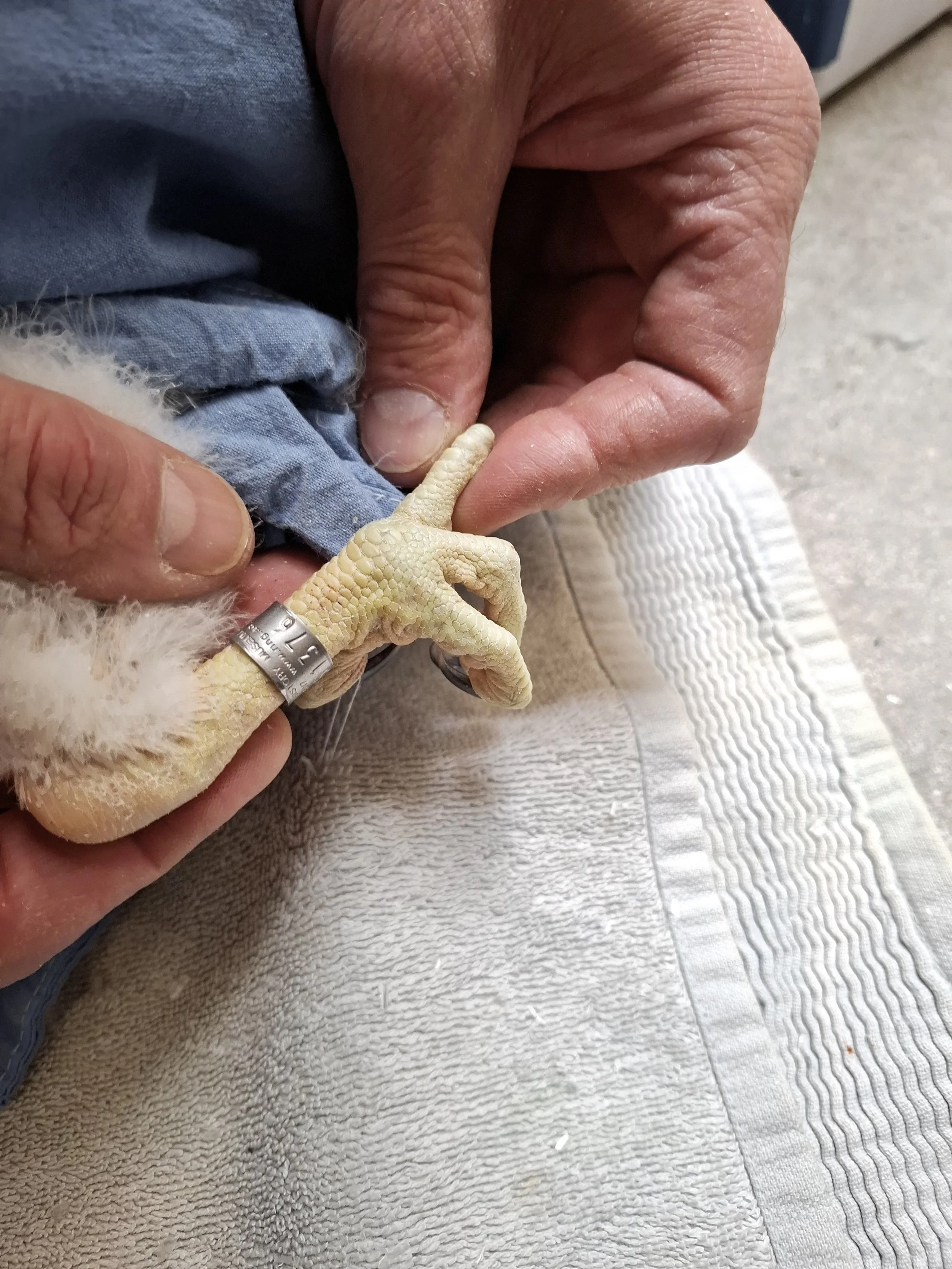
Fitting a unique BTO ring
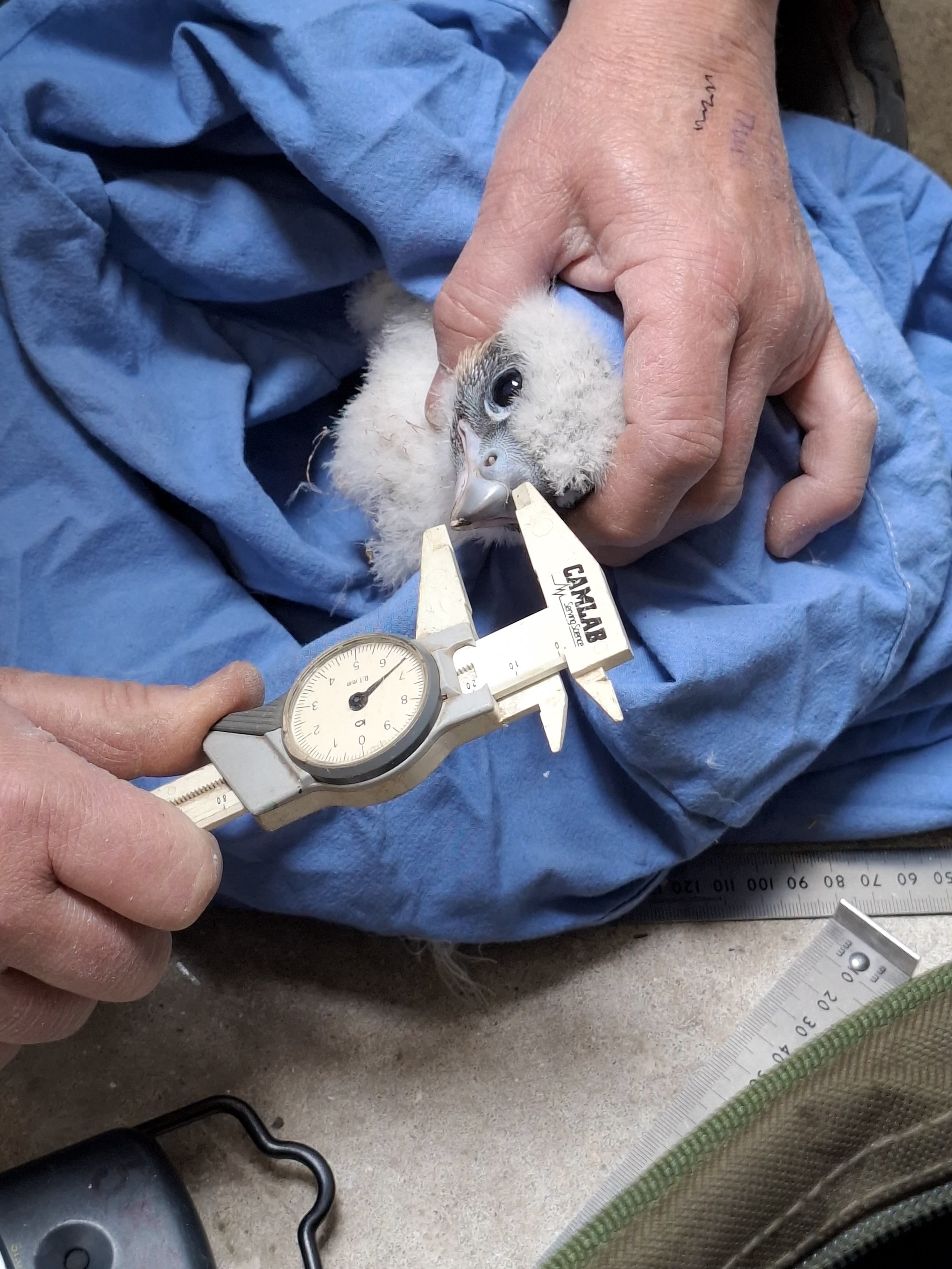
Taking measurements
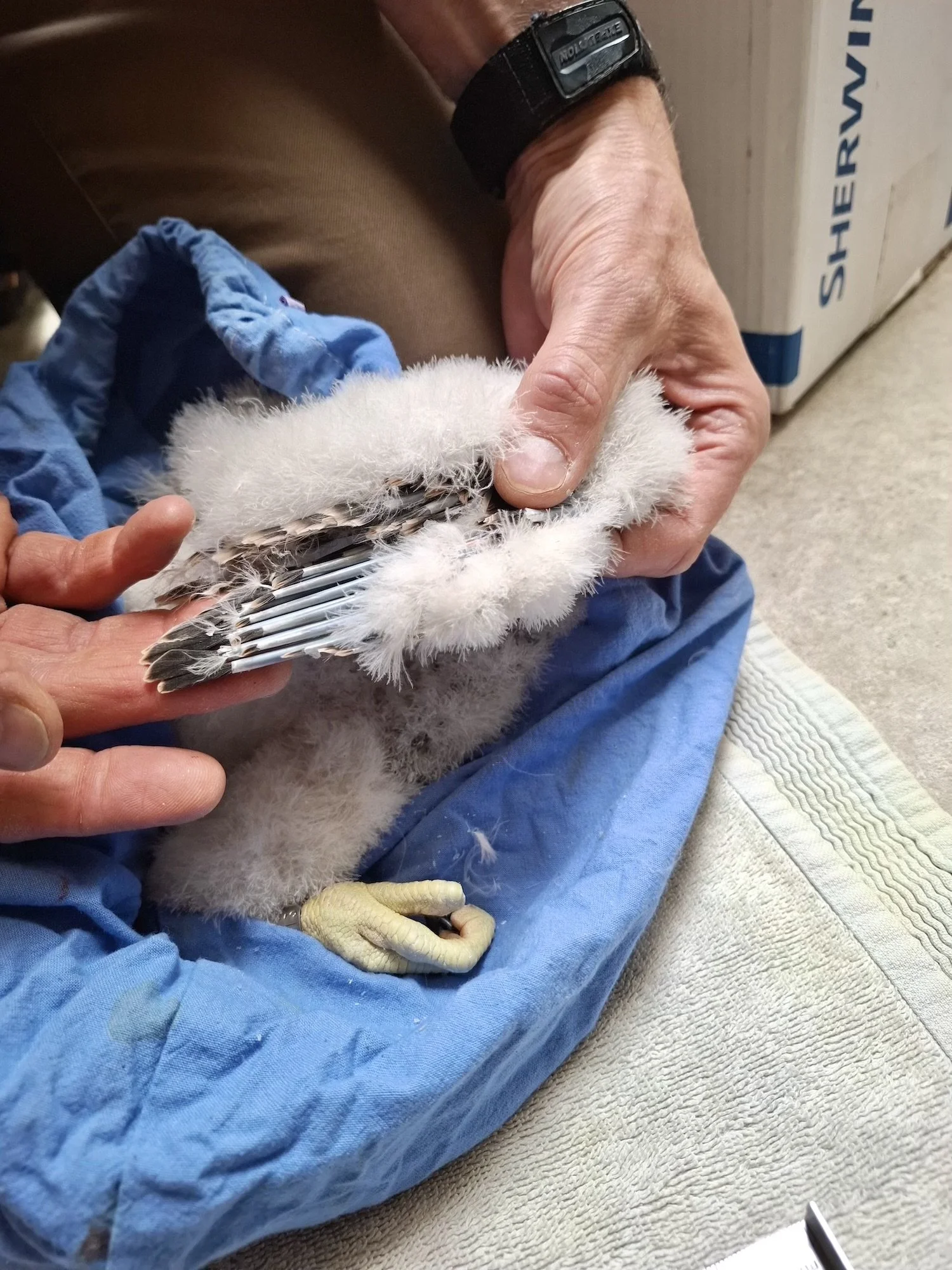
Examining feather growth
Once out of the safety of their nest box, it is really important to get the chicks ringed as speedily as possible so that they can be returned to the familiarity of their nest box. And I was expecting the chicks to be making a real song and dance and commotion, but Jason and Tim knew what to do. Once in the bags they are calm. As high sensory animals, keeping them in the dark, and us out of sight, saves them from processing potential threats, sudden movements, and unfamiliar lights, so that they don't panic or get stressed, and these birds were rather chilled.
I have seen bird ringing in person before and many times on TV, and the licenced handlers are all very careful and try to cause as minimal stress as possible by placing them in the drawstring bags. The difference I noticed with Tim and Jason was their trick of ensuring the chicks’ heads remained gently covered while the ringing was in progress, there's no need to get the chick entirely out of the bag, and when the head remains covered, the chick remains calm. Great to see such concern, not only getting the necessary information to help this species survive and thrive, but also for the birds’ welfare at all times. It's really important to remember that this exercise isn’t about having a cuddle with the wild birds or stroking their soft downy covering even if that would seem cool, it's very much about information gathering and getting those chicks back to up into the nest box asap before so the parents can get back to looking after them.
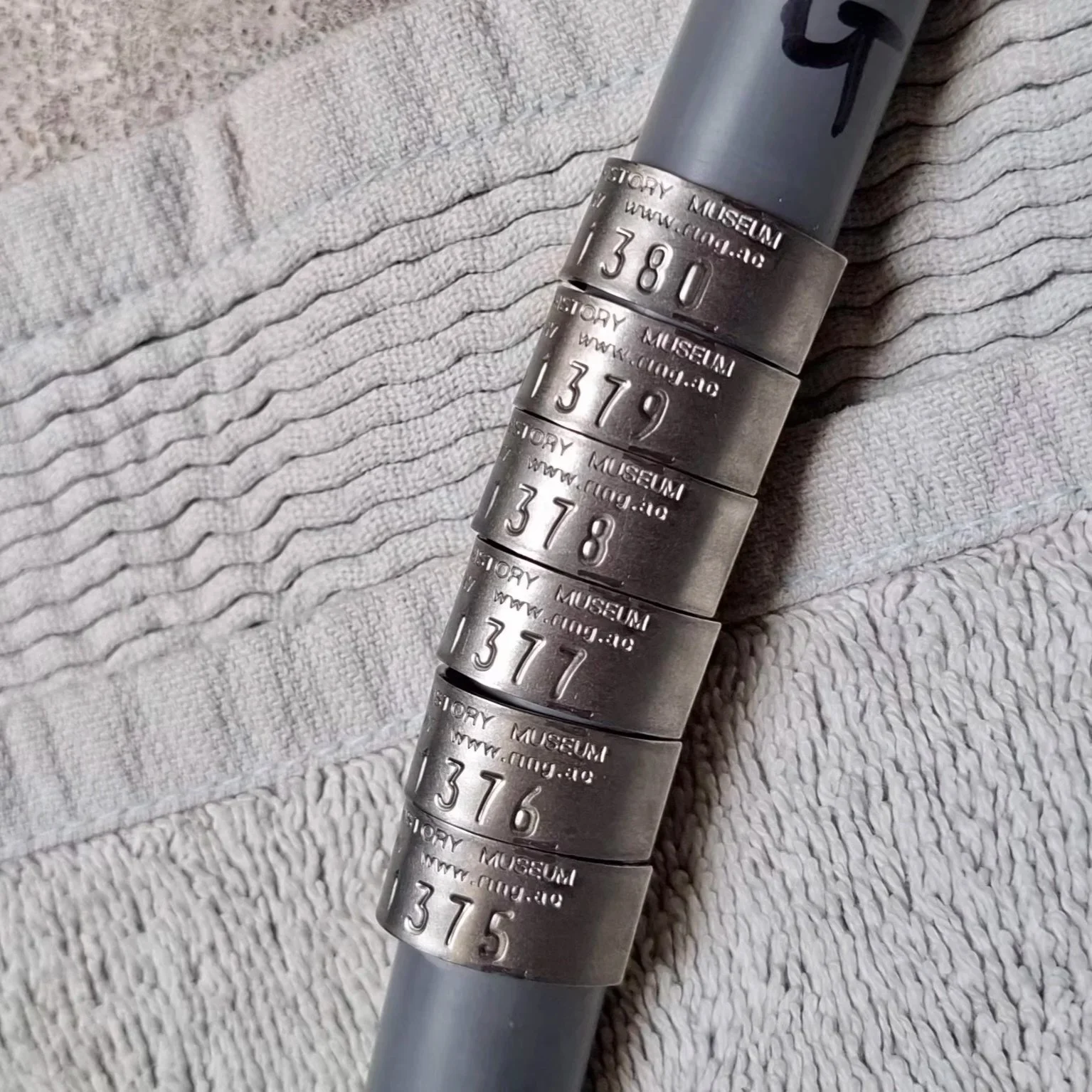
Each BTO ring has its own unique number
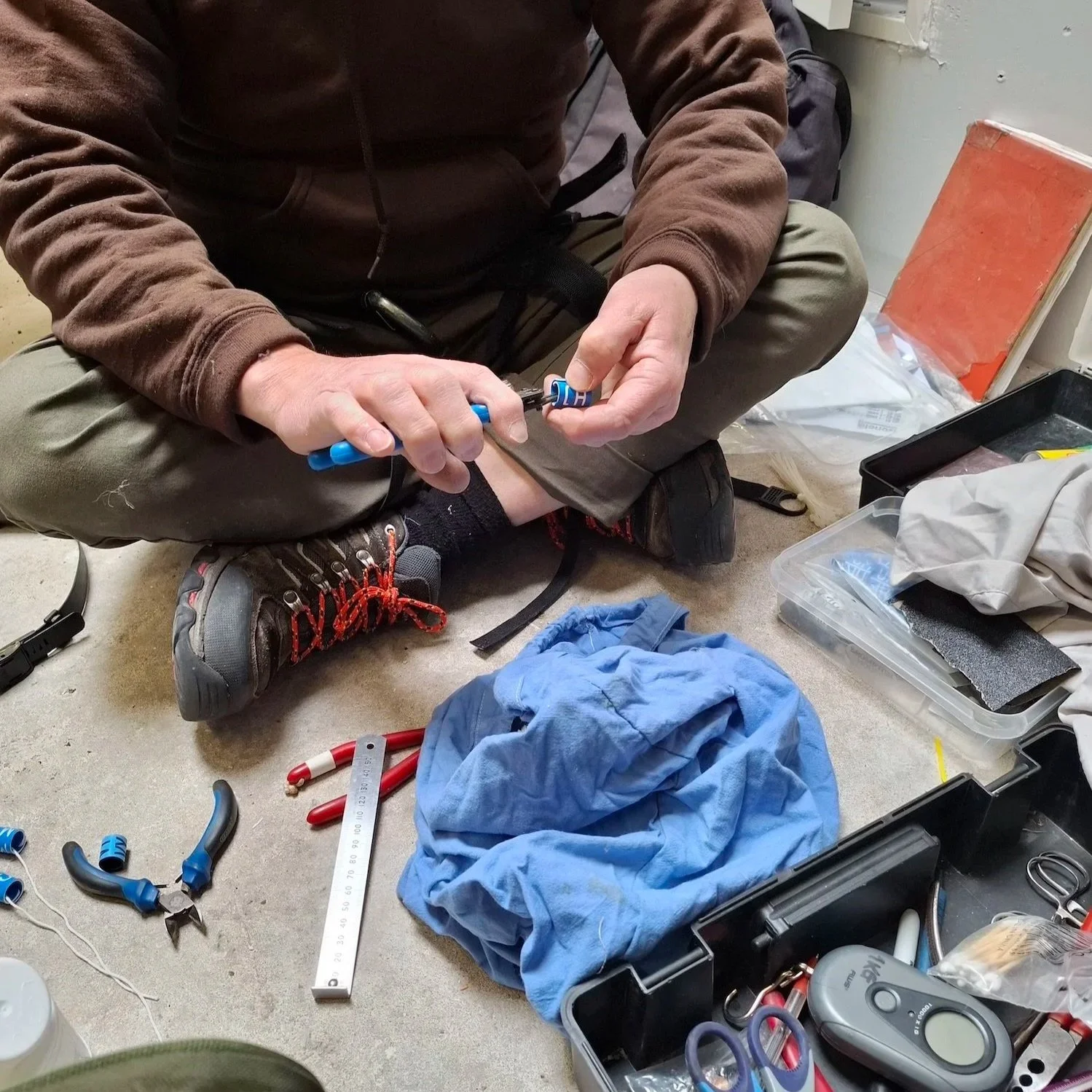
Preparing a colour ring for fitting
My part was to observe and record, for the purposes of this blog with an amazing opportunity to see these special birds up close. We had to scribe (note down the details) and there was a lot of information to write down! A record sheet had been pre-prepared by Jason to record the BTO ring and Colour ring numbers, the sex and weight of each bird, measurements were taken of wings bill, head length, toe-to-tarsus, and an assessment of feather development.
So what happens? Well, first the BTO identification ring is fitted to the leg – this is a metal ring with a unique sequence of engraved numbers, unique to that bird. Should the birds be found again we will know exactly which bird it is and where it came from. As the BTO number is only visible close-up, a brightly coloured ring with large font is also fitted for easy identification through binoculars or cameras.
DRSG have a good following of photographers with powerful lenses, who can easily let DRSG know the identity of a bird through the coloured ring. A brilliant of example of this for another species here in Dorset is Hobby, read about it here.
At this stage, the Peregrine chicks’ legs will have reached their full adult size, and what a size they are, so these special rings can be safely and comfortably fitted to hatchlings at this stage. It is quite something to see the size of the talons on these chicks already at only a few weeks old, and so this is another reason why they are handled with such care, such talons could easily cause the ringers some discomfort! These talons will be crucial for the capture of a variety of prey such as pigeons and wading birds.
Lots of measurements were taken. Using callipers to measure the beak size, Jason pointed out that the chicks still have their egg tooth, which I found fascinating. The egg tooth is a temporary, sharp end of the beak and enables the hatchling to break the inner membrane and crack the eggshell from the inside. After hatching, it becomes surplus to requirements and falls off.
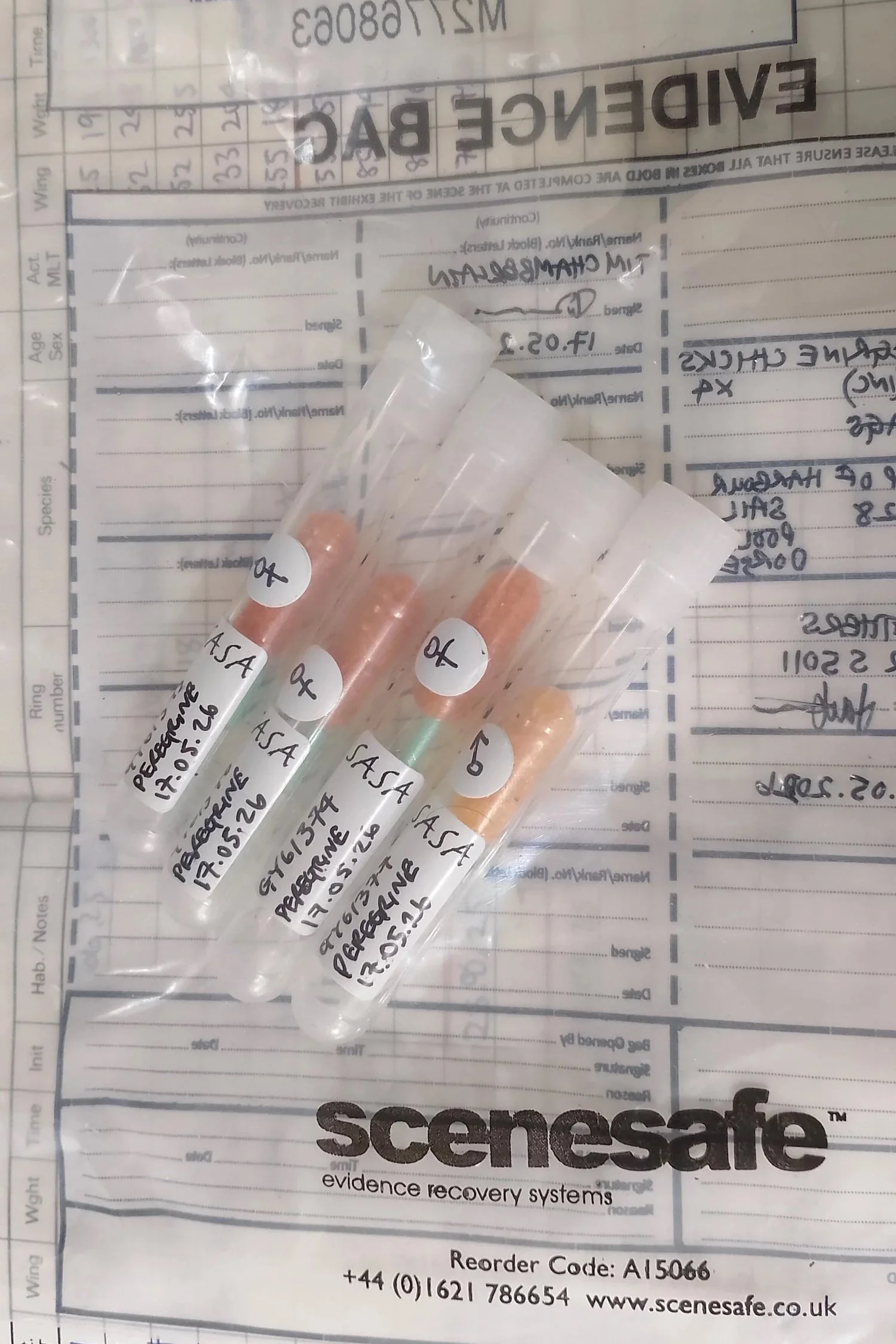
DNA samples ready to send to the lab
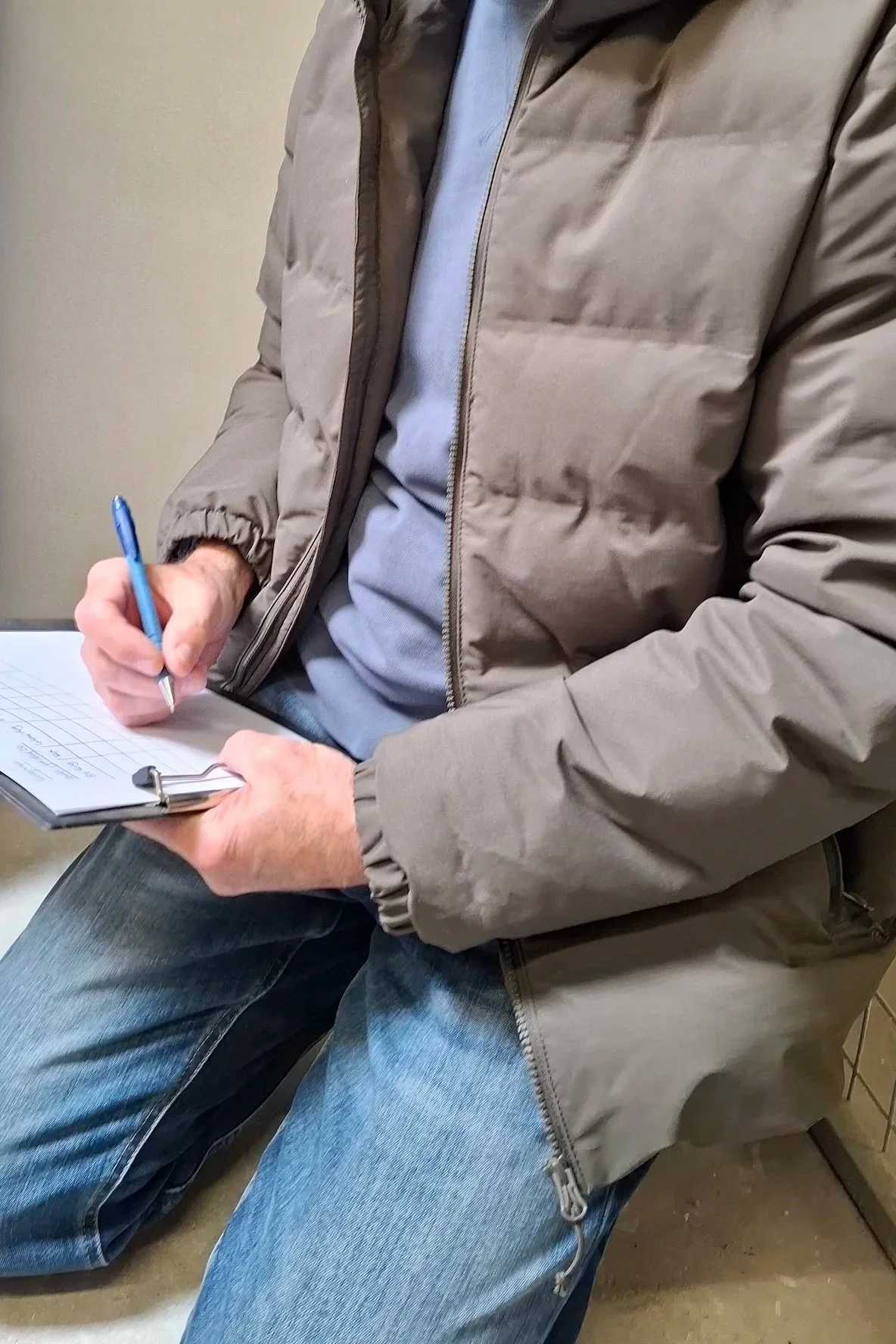
Essential data recording
It was great to see the chicks up close. Their beaks were light blue/grey in colour and their skin was very soft too. The fleshy, waxy area at the base of a peregrine falcon's upper beak where its nostrils are located - known as their ‘cere’ - will take some time to achieve the bright yellow which is so distinctive in Peregrine Falcons. Their eyes were huge and were the most beautiful icy blue at this stage. On the odd occasion when one of the chicks popped its head out of the bag for a peep, its gaze was piercing and you almost sensed the killer instinct within.
Sadly, there is still demand overseas for these beautiful birds for use in world-wide falconry and racing in the Middle East. This put Peregrines still very much at risk from theft by criminals. And they are sneaky, so to help authorities prove a bird has been illegally obtained, we need to use DNA evidence. The Peregrine’s identity can easily be proven by a quick DNA sample. Here the DRSG team took DNA samples from each bird with a gentle swab from the inside of the mouth. This was popped into a container with the bird’s identity number on. This then is recorded and passed on to the Raptor Forensics Project based in Scotland. It was quite interesting, if a little smelly, seeing the inside a Peregrine chick’s mouth. And from food remnants and their full tummies, it was clear to see they are feeding very well up there.
The chicks were weighed and it was noticeable how much lighter the male was to the three females. Male peregrine falcon chicks are smaller than females. This is because of reverse sexual size dimorphism—it is a trait of many raptor species. It makes them no less a predatory machine.
With wing measurements taken, and feathers checked, it is time for Tim and Jason to return the chicks back to the nest box. The whole process from start to finish doesn’t take very long at all, and the chicks remained more or less calm and chilled throughout. With the birds returned, we packed up and headed back to the ground. I could not resist, a few hours later, popping back down to the Harbour Sail building and looked up to see one parents standing guard looking out across Poole, and the other gracefully flying nearby. It was good to see them settled and not stressed by the handling of their chicks.
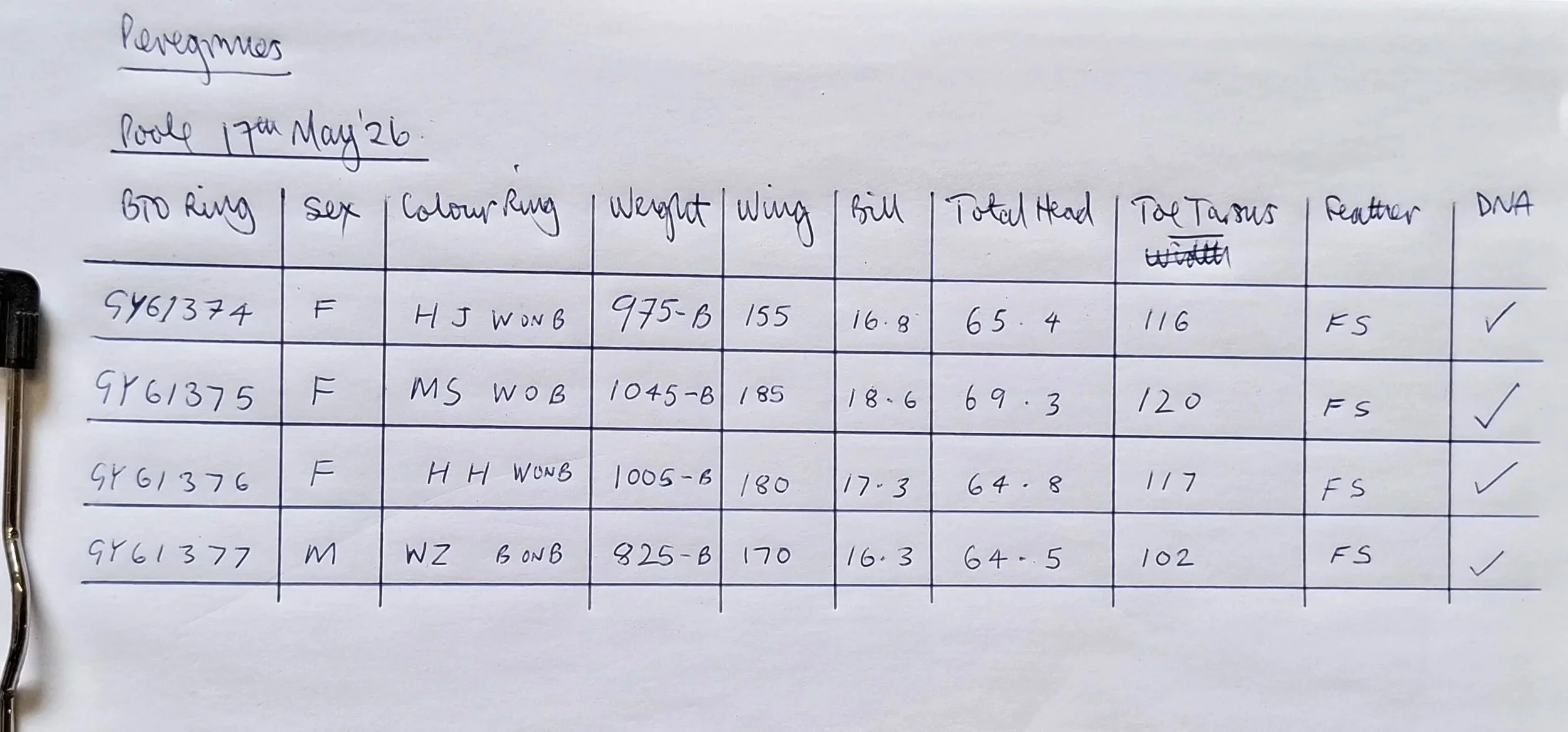
Poole Peregrine chick biometrics
Observing the ringing of one of my favourite birds was an awesome experience for me. wasn’t sure what to expect when I was invited along, but I was full of excitement and gratitude at this once in a lifetime opportunity of witnessing the ringing of Peregrine Falcons. I have spent many years now in awe of these creatures, the fastest creature on earth, and it still fills me with huge happiness seeing them flourish in our local area and having the chance to photograph them in all their glory. To have the opportunity of meeting them so up close and personal, and to watch Tim and Jason handle them with such care and respect, makes me feel even fonder of them now. It was an experience I shall never forget.
And it will be an exciting summer, watching these young birds grow and leave the nest, hopefully with huge success for the four chicks, and all the Peregrine Falcons of Poole.
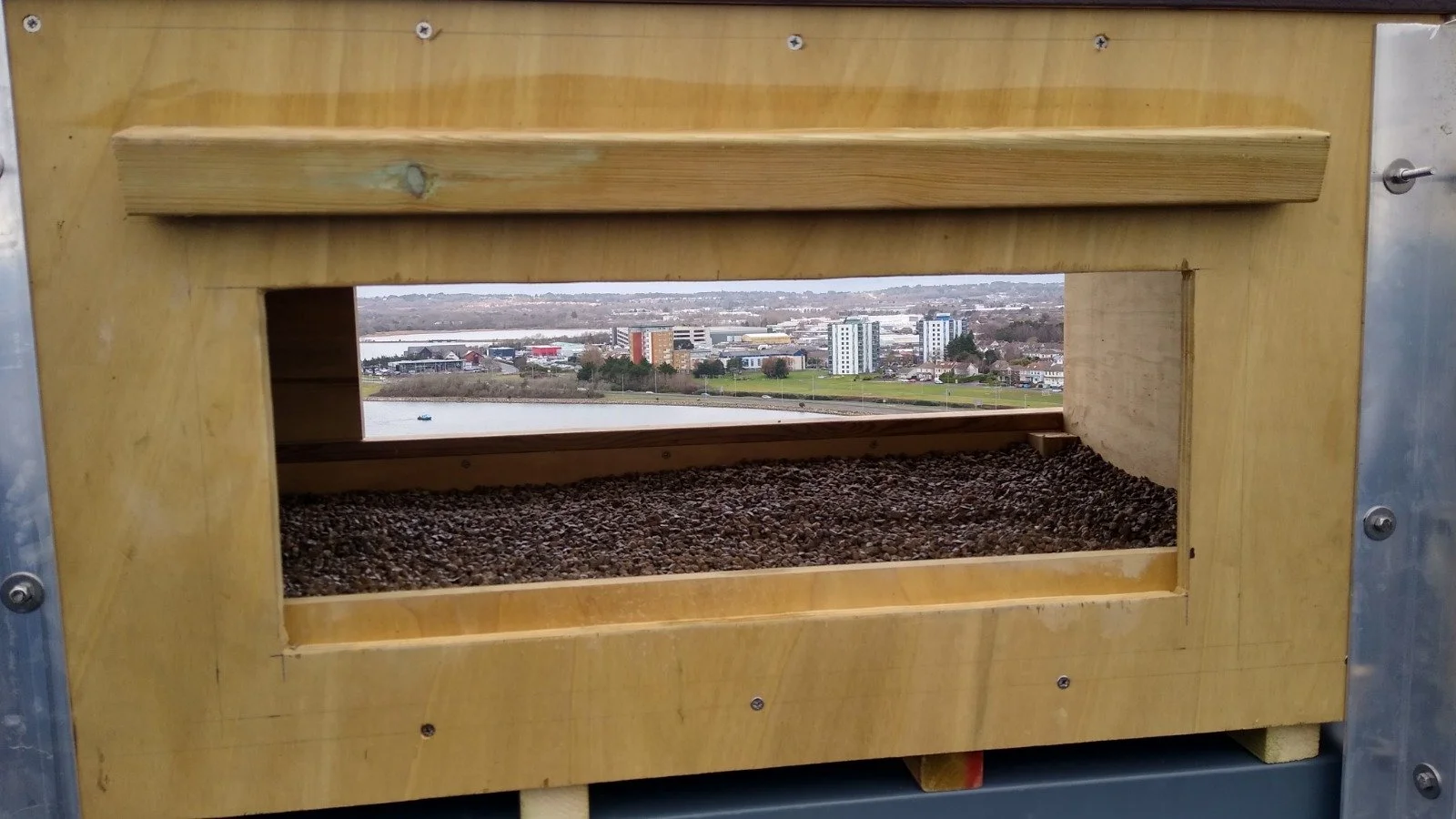
Freshly installed Poole peregrine nest box - just check out that view!