
A bounty of colour-rings
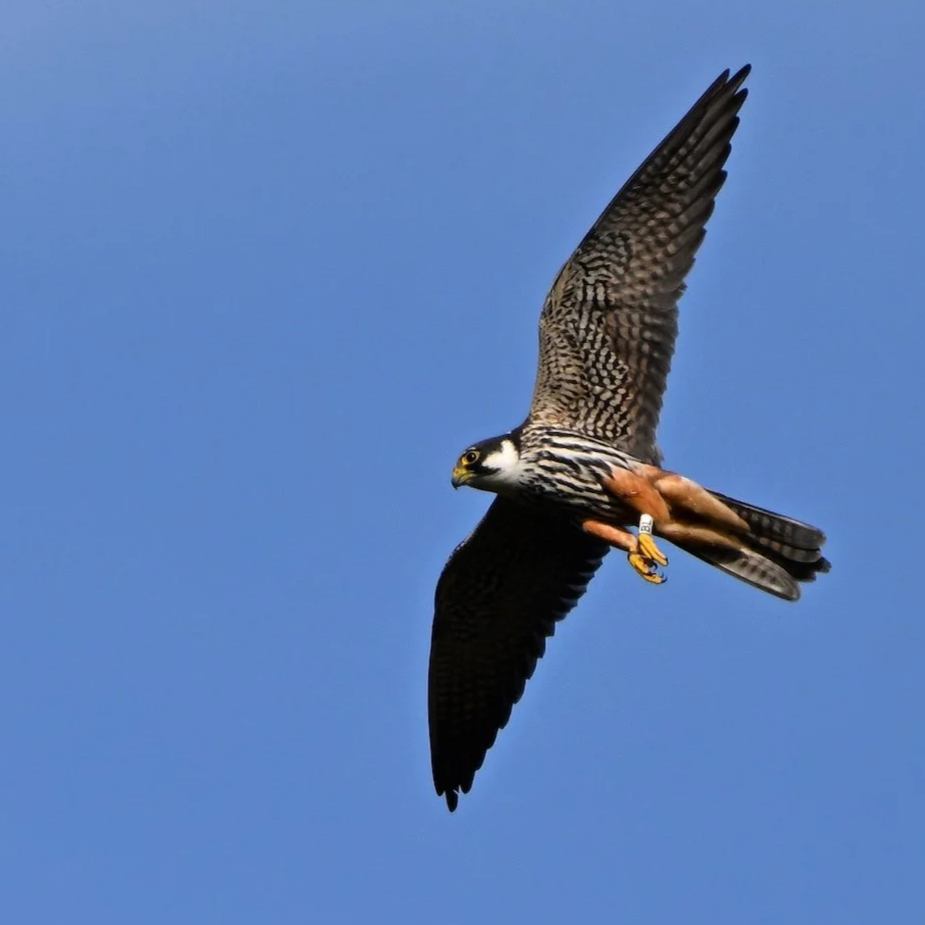
Each year we get more and more reports as photographers send us stunning images of colour-ringed birds. Helping us to build up a picture of their movements, these rings are an invaluable tool in the studies of elusive raptors. 2026 proved to be a bumper year for records and we’ll start with a stunning image of a Hobby in flight as a great example of the value of colour rings to science.
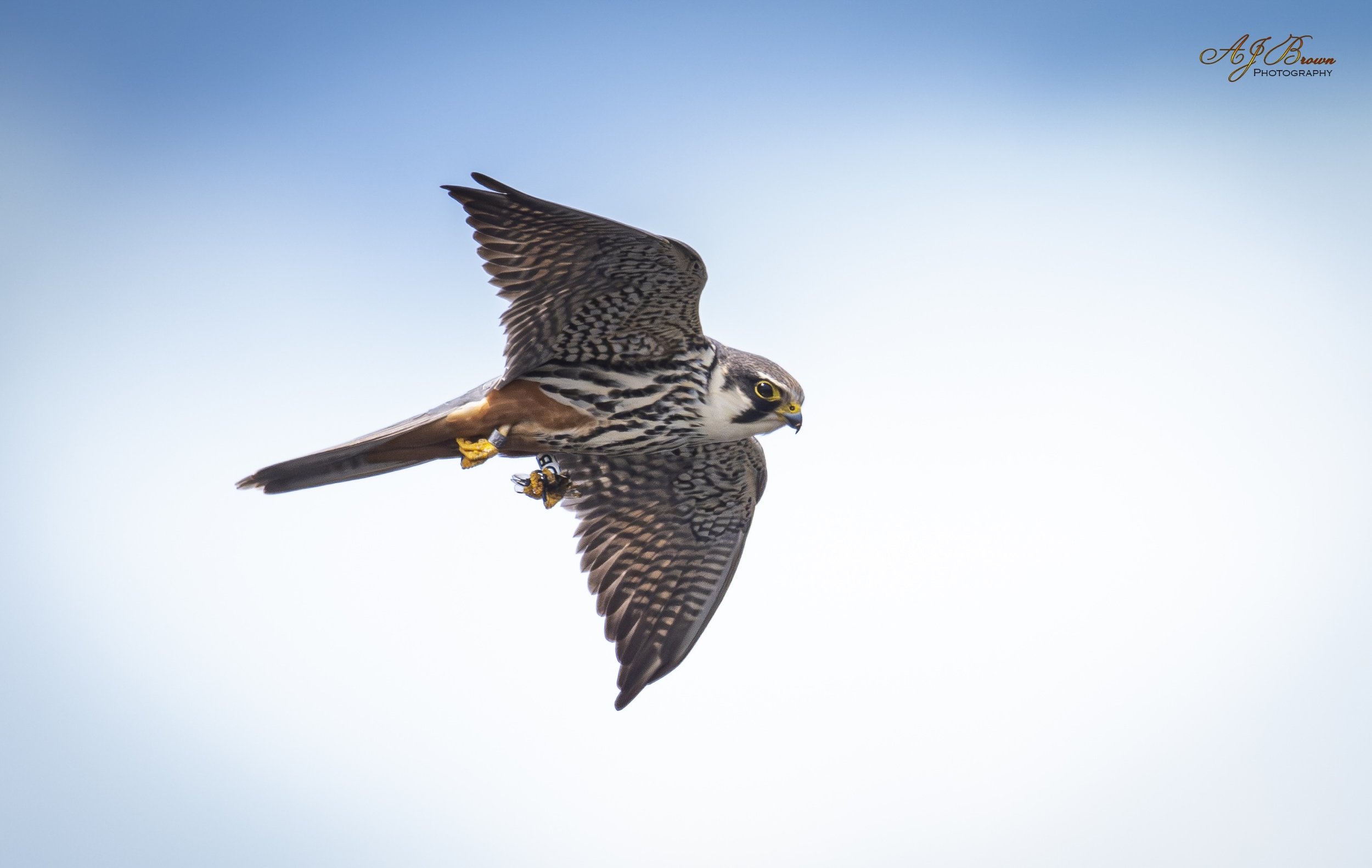
Eurasian Hobby in Spring © Aidan Brown Photography
The first record of the year was Aidan Brown’s stunning image of an Eurasian Hobby in flight and will provide greater insight into foraging effort as you’ll see below. Clearly showing a white colour-ring with the letters DB. Photographed with a dragonfly clasped in its left foot, this was a male, fresh back from its wintering quarters in Africa. DB was taking advantage of the rich feeding found across the Wareham Forest FE heathland and mire mosaic, In fact, Hobbies rely on the abundance of these big , early hatching dragonflies to help them regain breeding condition after a flight home that can be up to 8,000km!
We had last seen DB in late August, 2025, still bringing food in to two noisy, fledged chicks at a site in south Dorset. Nest footage showed lots of interesting behaviour but we’d little idea how far he went to hunt. Now we know from Aidan’s image that DB is regularly feeding at dragonfly hotspots more than 6km from his nest. Of course, for a Hobby that is only a mere few minutes of flight, but it does show the high value of specific areas for some rare species. Does DB fly far further than this? The answer is we simply don’t know. but this something we are focussing on through our ongoing research.
Next up was our first record of a likely breeding bird from outwith the county. Photographed again hunting large dragonflies, this time a Broad-Bodied Chaser, Andrew Merrick’s image shows CN, a 3cy (3rd calendar year) male (hatched in Dorset 2024) carrying prey to a nest somewhere just across the county boundary. Note the wing moult in his immersion primaries, appearing as darker, fresher feathers. Not a lot is known about this so all data is of value.
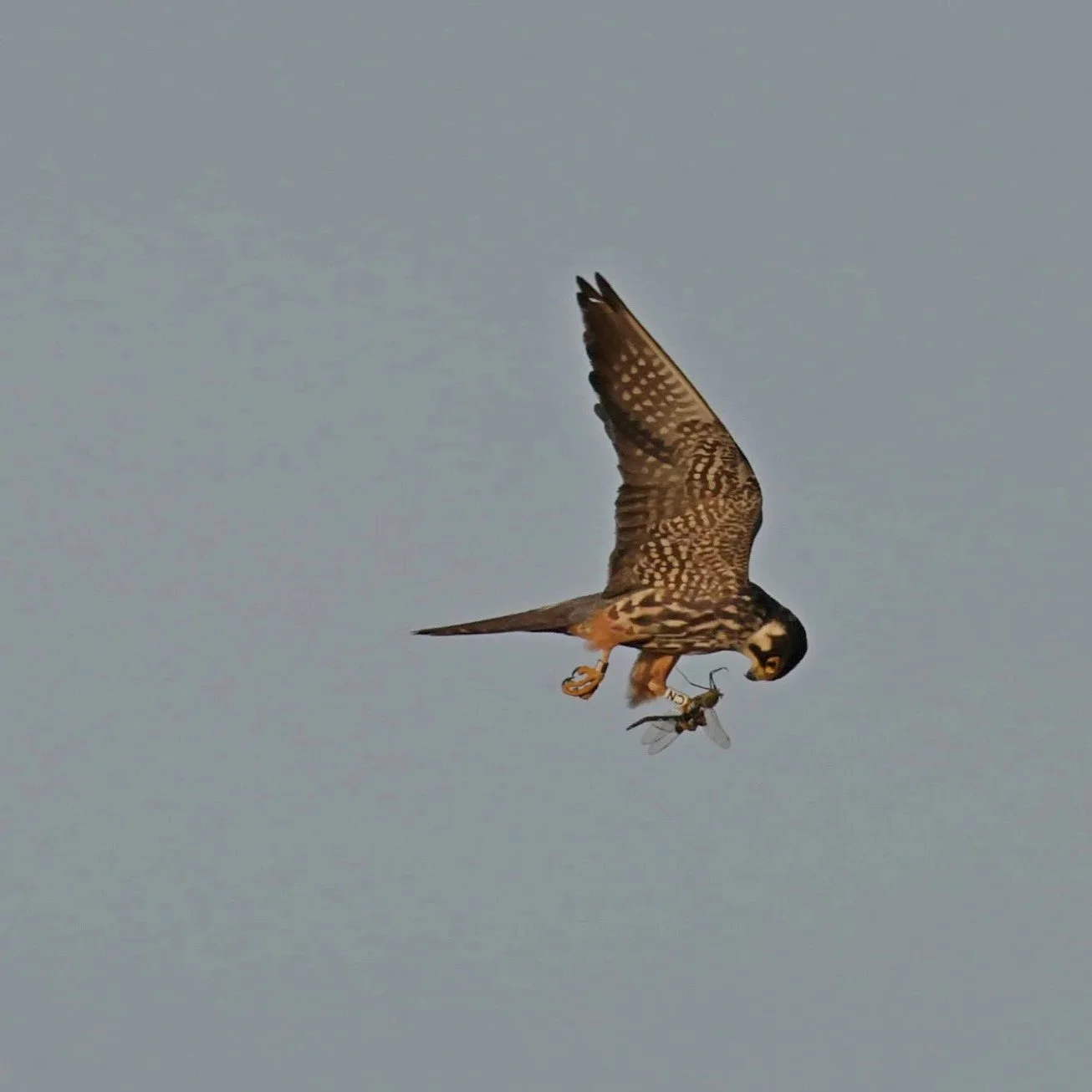
Hawking dragonflies © Andrew Merrick
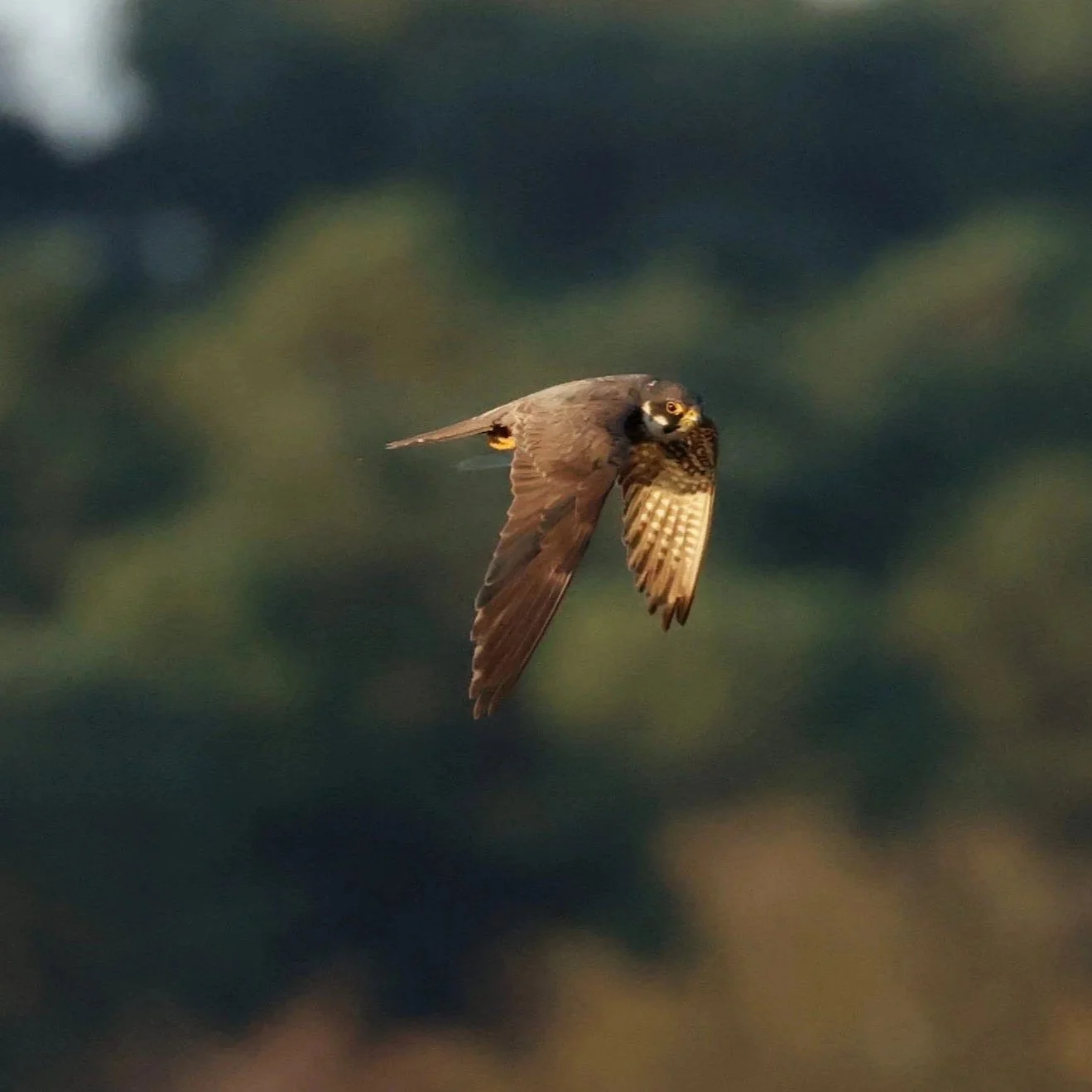
Wing-moult in a 2cy male © Andrew Merrick
Another great record was from active DRSG volunteer Alex Harvey. Again a male, the colour ring clearly reads BL, pinning him to a nest within Wareham Forest FE. He was ringed there as a fluffy chick back in 2023. The well used and poop-bespattered nest was a basket installed in 2019 and used successfully for many years, until the Goshawk came calling last year that is! Note: the original Hobby pair moved 1km this year and fledged 2.
Now in 2026, and possibly since 2025, BL has been breeding in another part of the forest. We wouldn’t have known who he was without Alex’s help. You can see an image of BL, with this year’s young DJ, on our new page showing colour ringing data, with each bird getting a mini bio!
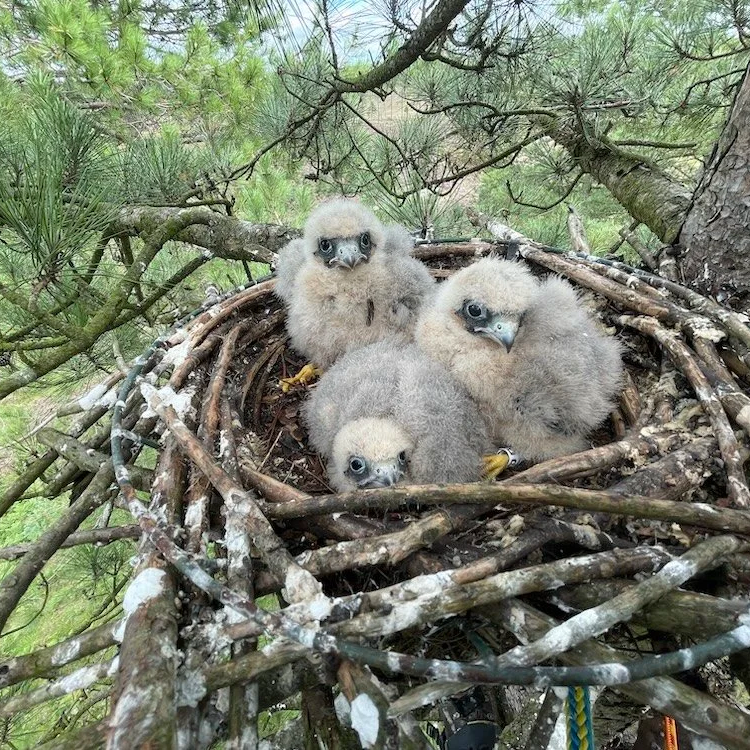
BL (right) as a chick
Breeding male, BL, on territory © Alex Harvey
The data is limited - the colour ringing project started in 2021 - but 2026 saw 5 sightings, bringing the total to 7 sightings from 54 birds ringed. As we look forward, we’d like to think that with the addition of the 2026 cohort (DC through to DZ), 2027 could be a very interesting year indeed.
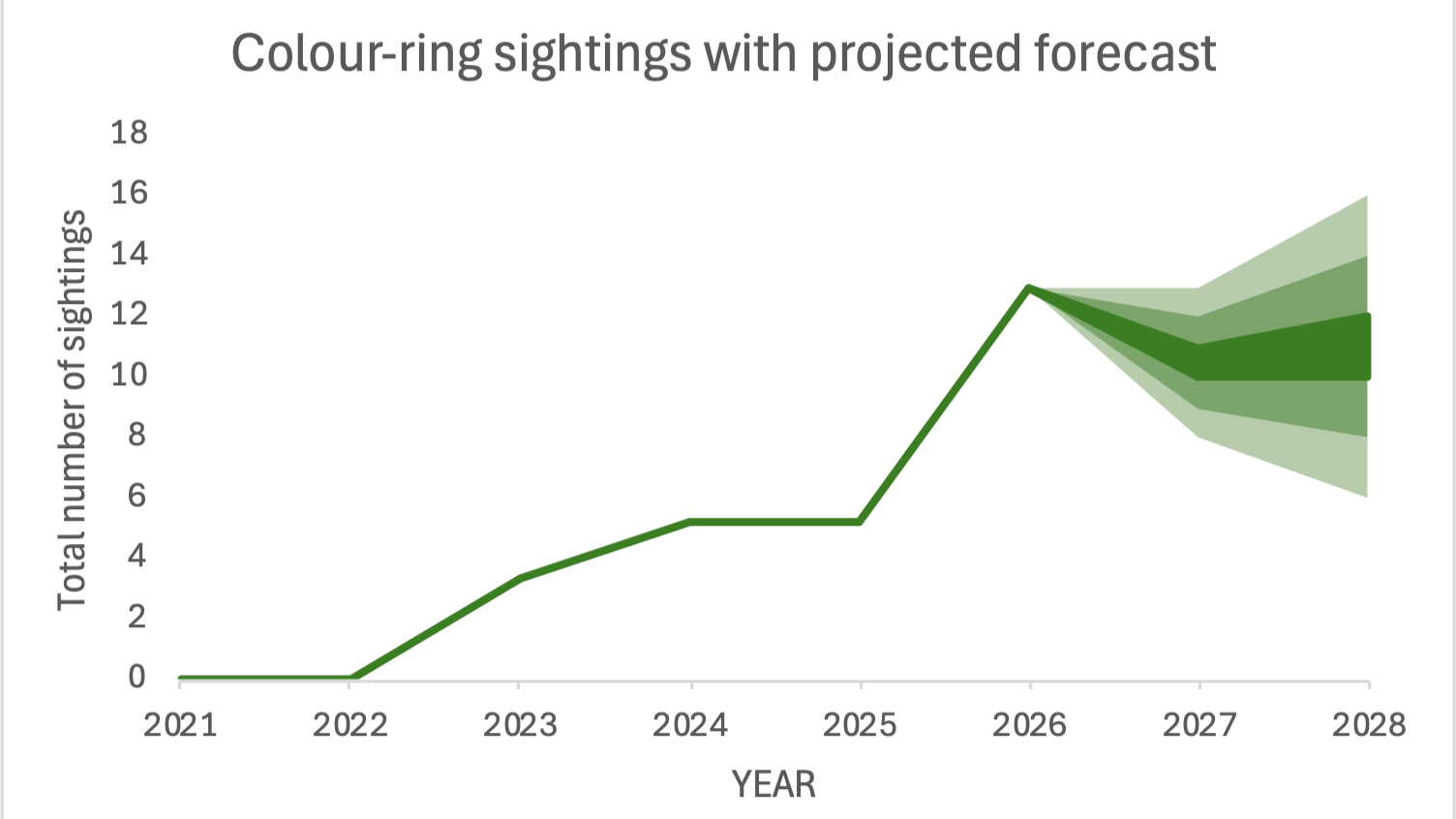
DRSG colour-ring sightings
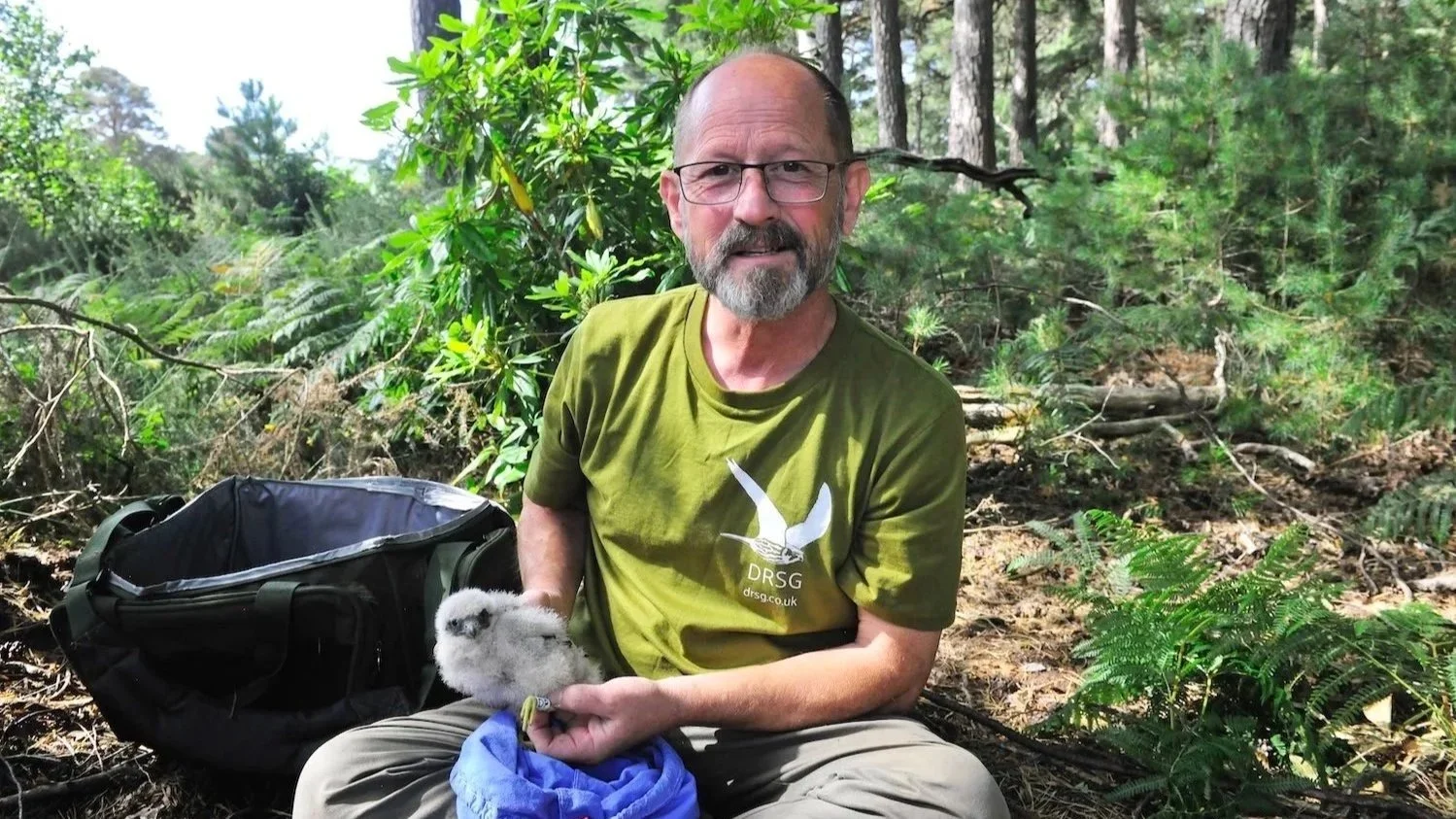
Fitting colour rings to the 2026 cohort.
And we should say that it’s not just Hobbies that have colour rings. Part of a special project in the south, this 3cy male Honey Buzzard was photographed at an undisclosed site in Dorset this summer, having been ringed in the New Forest in 2024. Thanks to all the incredible photographers who assist us with this project. For more information and lots more images, see our new page Colour-ringing data.
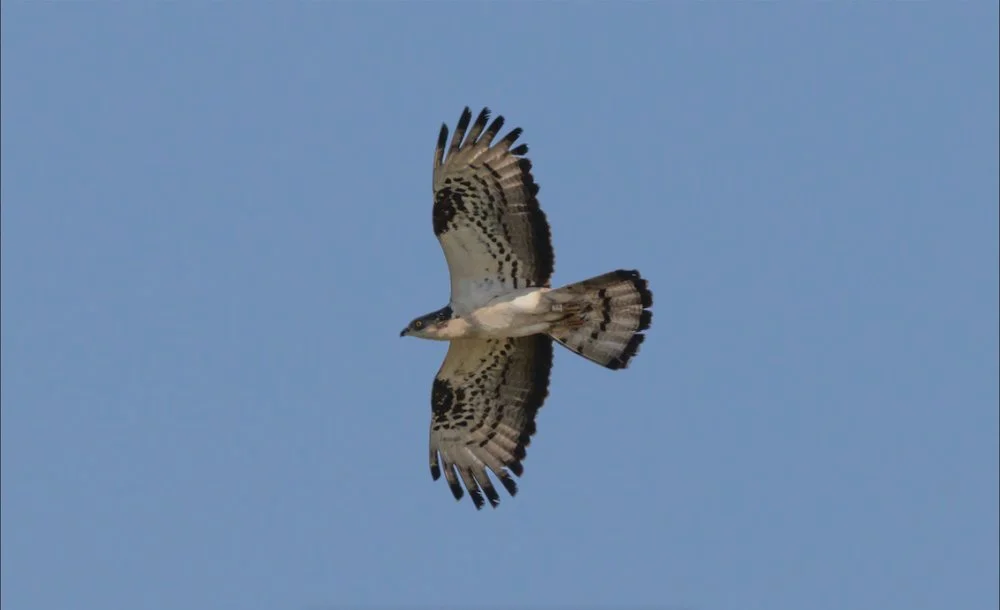
Honey Buzzard © Gerry Shilham
