
Hobbies soon head off on migration for warmer winter quarters. As one of the UK’s rarest breeding falcons, the Eurasian Hobby is amazing to see in flight, diving after dragonflies or stooping at Swallows and other small birds. Arriving each year in late April, they are only with us for the long (increasingly hotter!) summers to breed, before heading south again.
But have you ever wondered just where our Hobbies disappear off to each winter, or just how far they can travel? Now, as we once more prepare to bid adieu for another winter, I thought it would be good to revisit just where it is that they go for half the year. Thanks to ace wildlife cameraman James Aldred, we can have a glimpse of the kinds of habitat where they wait out our northern winters.
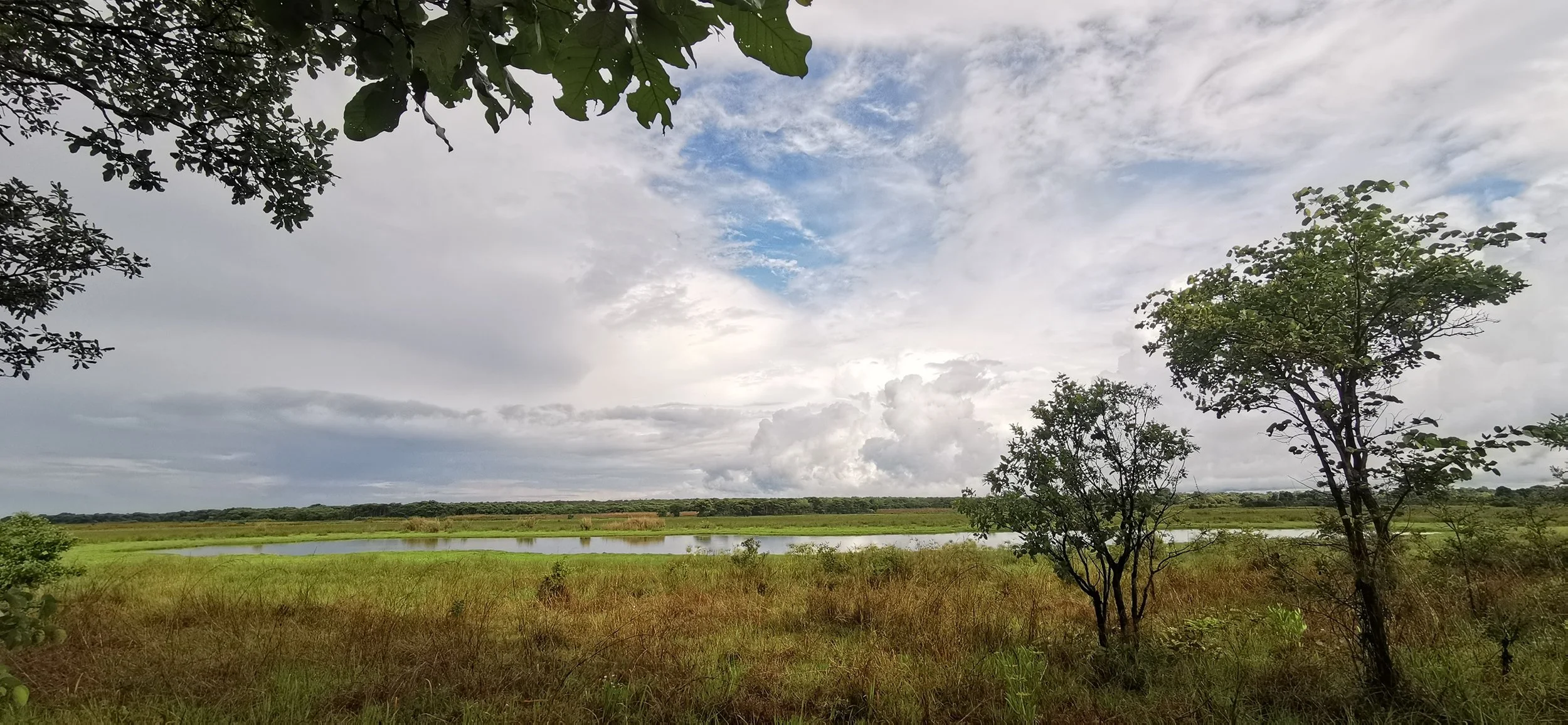
Hobby hotspot in Kananka National Park, Zambia
The Eurasian Hobby is a summer visitor the to the UK, arriving in late April from its wintering grounds in south, central Africa. According to Google, that’s a straight line flight of around 4,800 miles (7,700 kilometres) to Dorset. This means that one combined autumn out and spring migration back journey would come in at nearly 10,000 miles, and all without factoring in any wild weather and food stops en route.
Tracking data in the literature is scarce. One previous study (Meyburg et al. (2014) Two complete migration cycles of an adult Hobby tracked by satellite) showed birds annually flying 16,000km on migration alone, sometimes covering many hundreds of kilometres a day. These German-born birds wintered in Angola, covering vast distances over wintering ranges of 400,00 to 450,000 square kilometres. Always on the move, they were possibly following flying termite swarms or the like, with each night’s roost sometimes many hundreds of kilometres from the last.
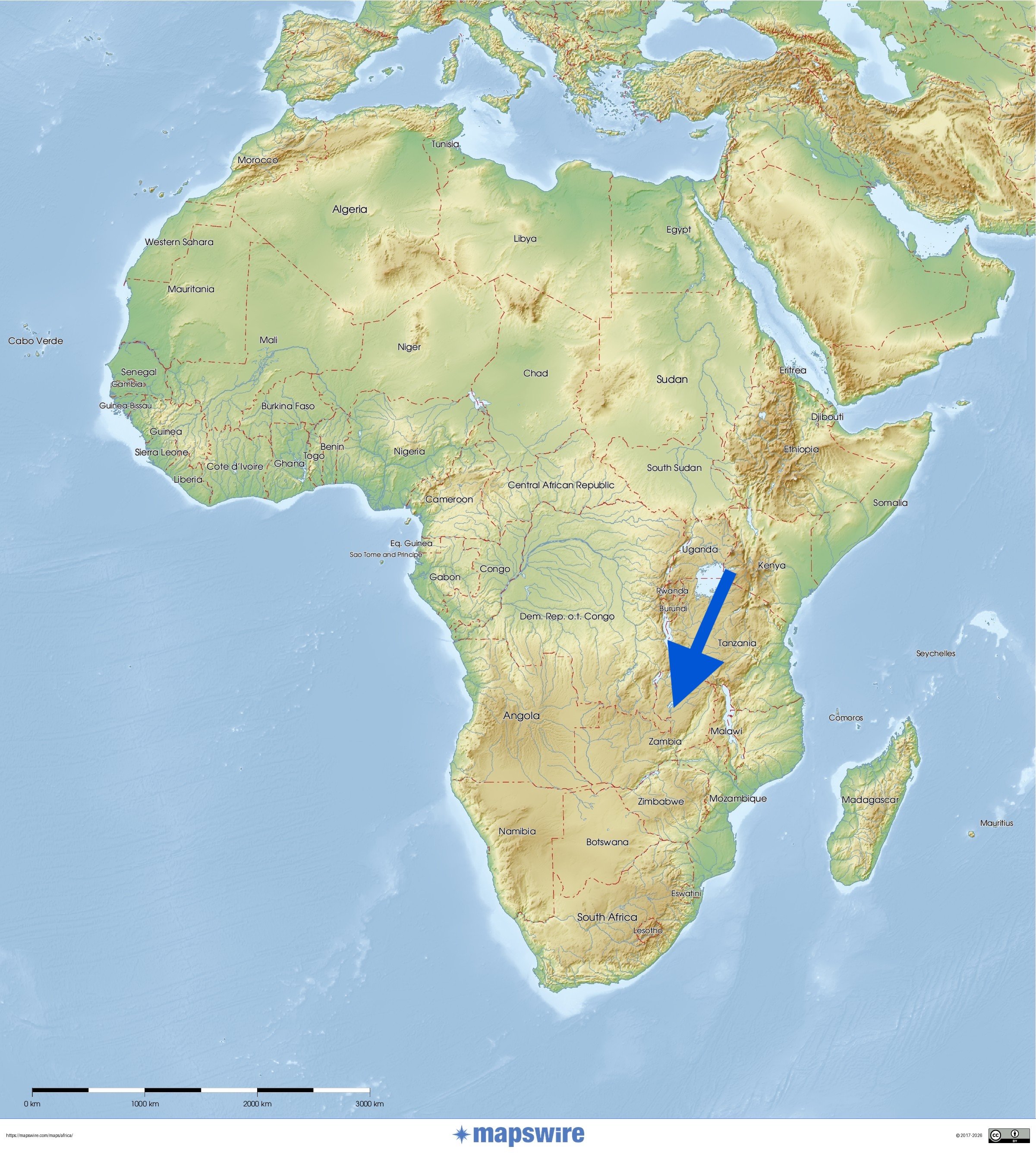
Location of Kasanka National Park, Zambia (///grafts.forevermore.tomato)
On a previous trip to central Zambia a couple of winters ago, whilst busy filming other wildlife, James Aldred observed several Hobby hunting in Kasanka National Park (see blue arrow on the map above). Established in 1972, the park is now a peaceful sanctuary and lies on the southwestern edge of the Lake Bangweulu basin, some 850 miles south of the equator.
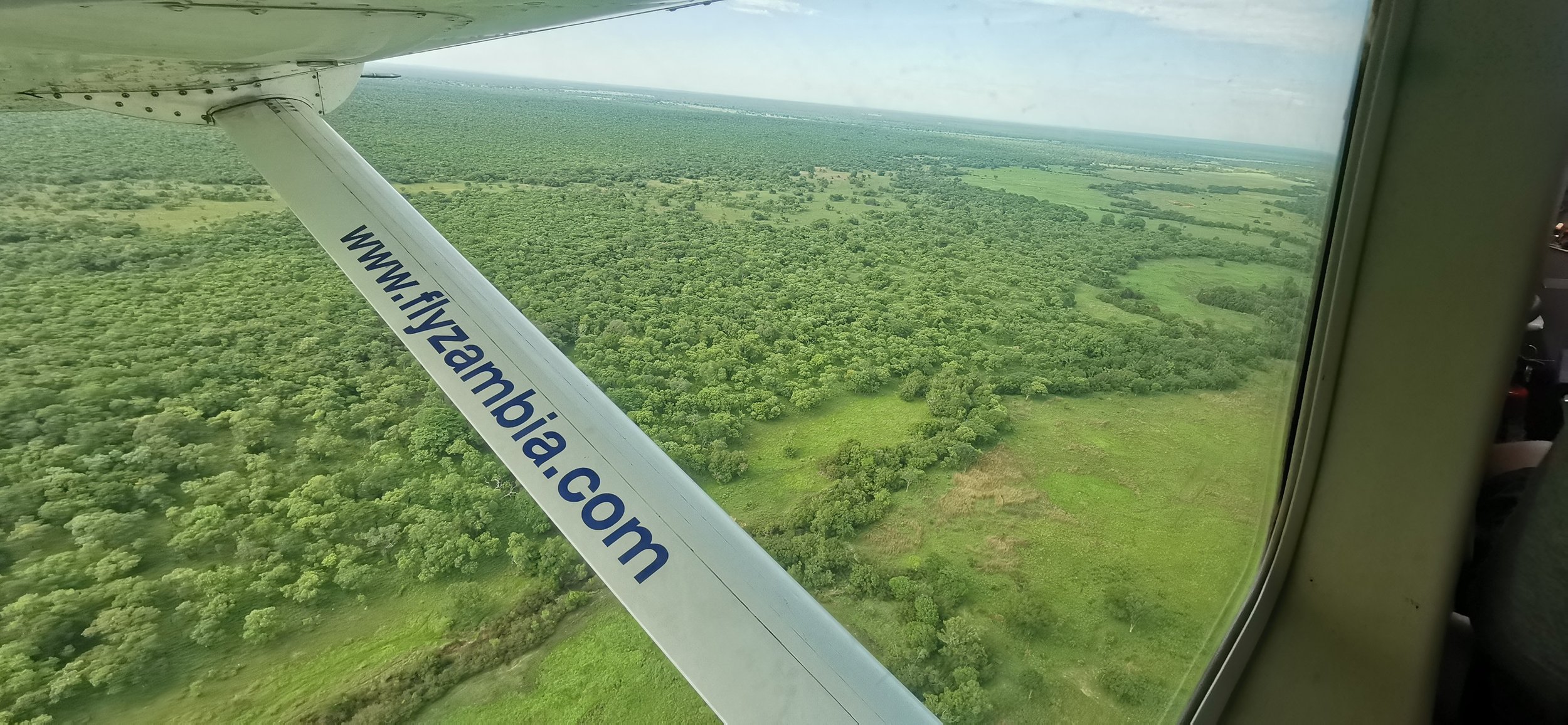
Flying over scrub forest of Kasanka National Park, Zambia
As you can see in the images, the habitat there is a mix of open grasslands, wet areas with good coverage of forest which is very rich in tree species and forms a half closed canopy. With areas of miombo woodlands, swamp forest, grasslands, floodplains and riverine forest. All this adds up to the kind of habitat home to an incredible variety of insects and other invertebrates, all of which are on the Hobby’s menu. There will also be many small insectivorous birds there too.
On a day off, James spent a pleasant hour watching Hobbies dashing around in the air, chasing dragonflies over the lake. And not jsut one or two, but 15 of them, what a sight that must have been! With so many of these falcons foraging there, It would be amazing to know where they were from - were any of them UK birds, could one have been from one of our beloved Dorset pairs? Until now we have had no way of knowing. But with advancements in our studies, we hope be able to know a little more about their movements soon.
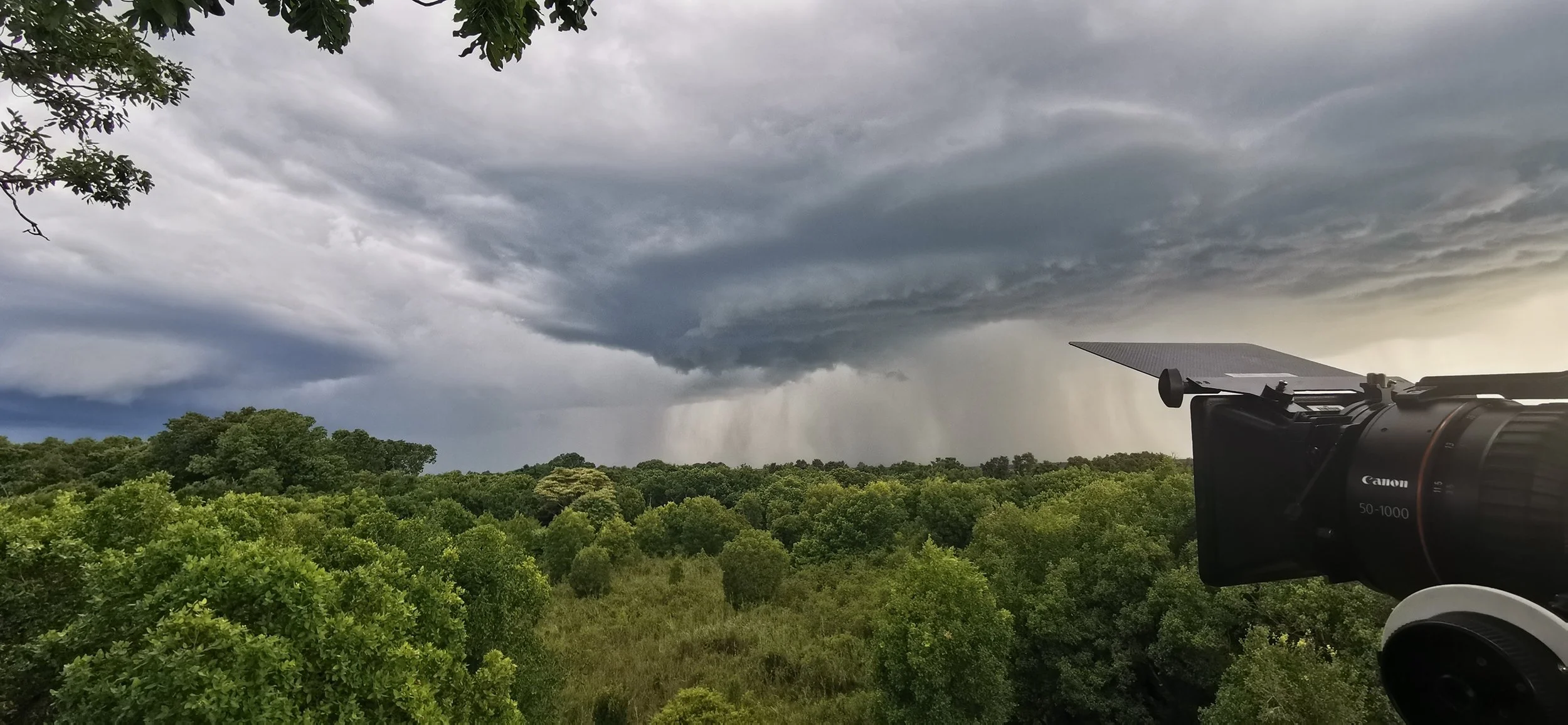
Hobby habitat in Kasanka National Park, Zambia
As part of our long-running study of Hobby ecology project, each summer we monitor breeding pairs. This includes visiting nests under licence to measure and ring chicks at the nest. We now also colour-ring every young Hobby with a unique 2 letter coded ring. This means that when they return, thanks to ace photographers, we can identify individual Hobbies and this year alone, we have had important re-sightings of birds ringed back in 2023, 2024 and 2025, the last being a sub-adult male we call a 2cy or 2nd calendar year bird.
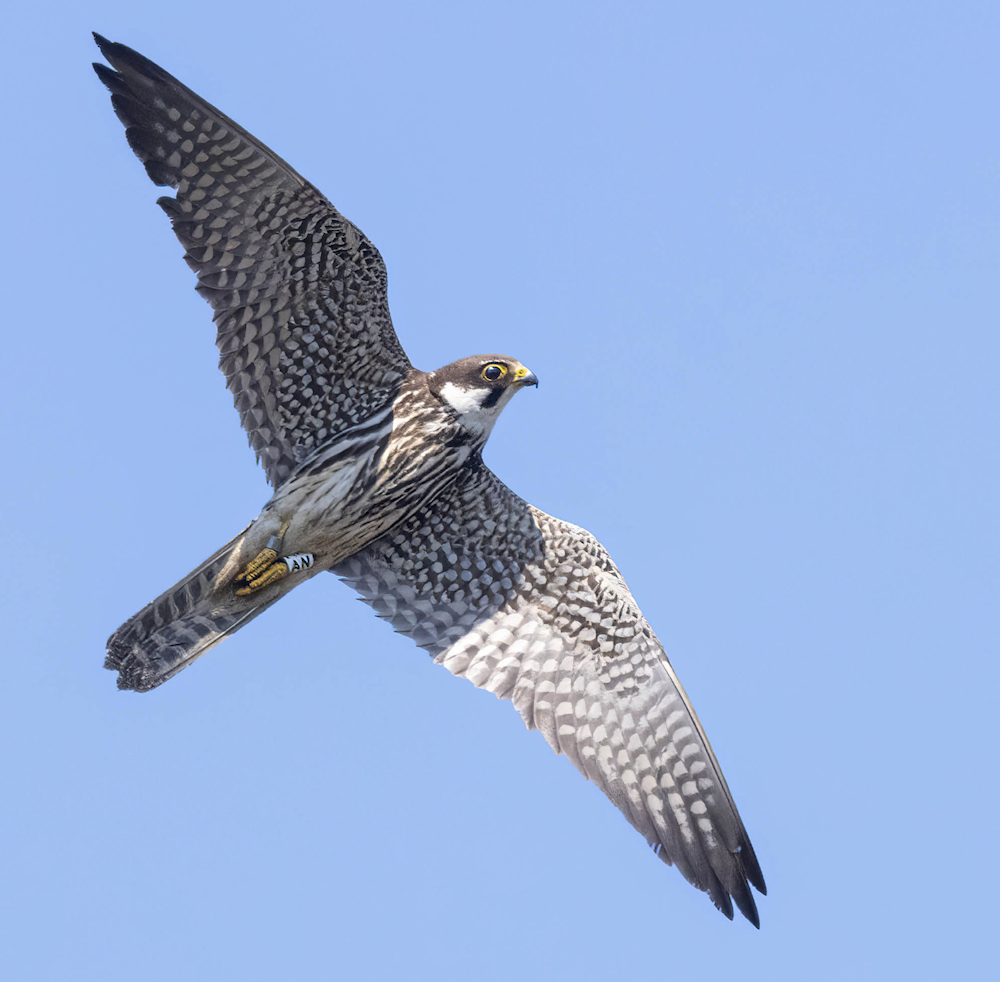
Hobby ‘AN’ in Dorset by Mark Wright Photography
Spotting these colour-rings here is hard but with so many superb photographers around, we have had some great returns. To do this in say Zambia would be very hard indeed, but not impossible. One way to do it would be to install camera traps at perches around hotspot locations and this is something we are looking into. There may also be a way to ask photographers on tours to keep an extra sharp eye out, if anyone has any great ideas, please do get in contact!
For now, with more colour-ring sightings being reported each year, summer is an exciting time to receive UK sightings of project's colour-rings. Hobbies can live for over 14 years so there is a good chance they will be spotted at some point. Please let us know any records, you can report a colour ring here and do tag us in Bluesky of images you see. Happy wildlife watching and keep your eyes peeled for a last glimpse or two of a Hobby zipping past!
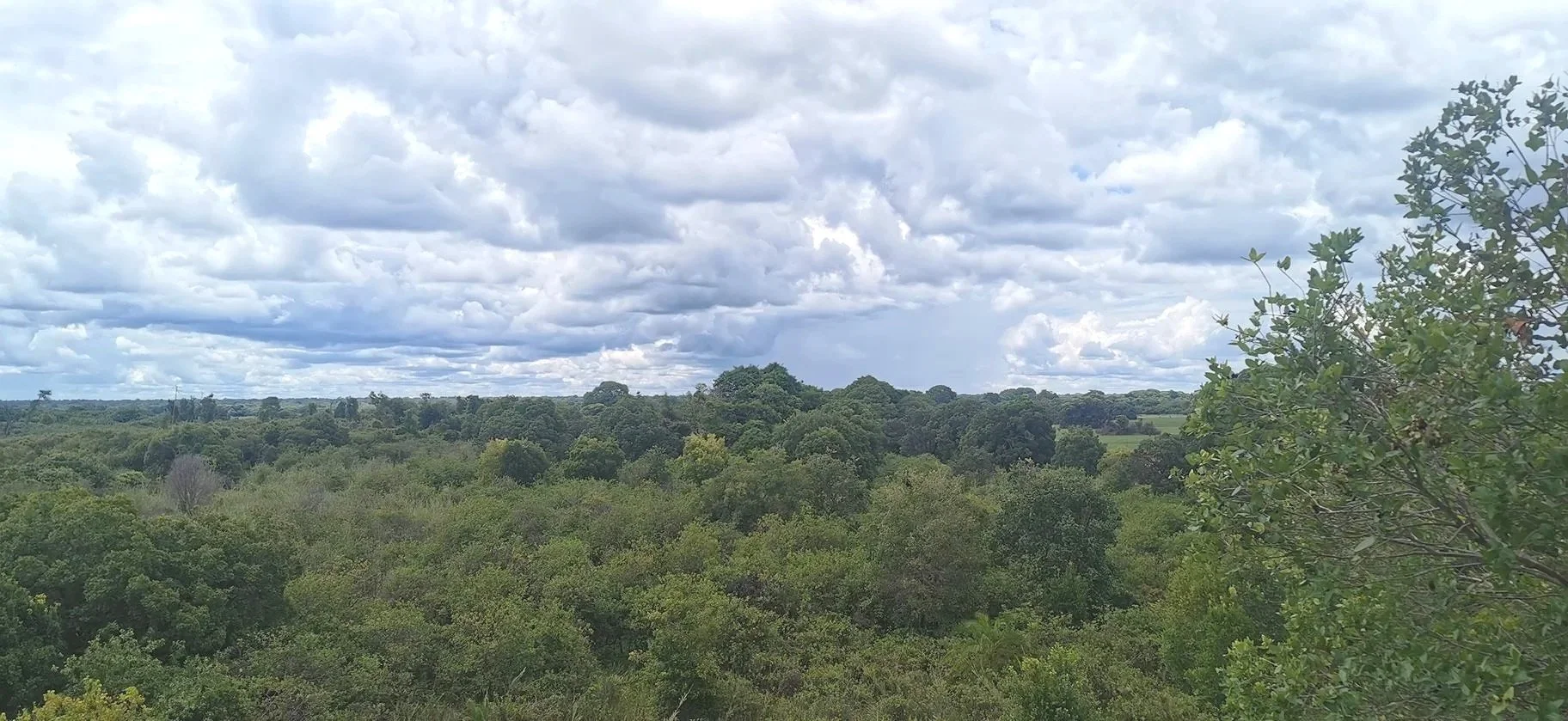
Forest and scrub in Hobby wintering grounds
